Kenny's Tree Removal

SAFE • PROFESSIONAL • RELIABLE

HAZARDOUS TREE REMOVAL

Expert extraction of dangerous, dead, or storm-damaged trees near your home, driveway, or power lines. Serving Fuquay-Varina, Wake, and Harnett counties with crane-assisted takedowns and immaculate cleanups.

★★★★★ 5-Star Rating on Google

Request Your Free Quote


    ```
    KNOW THE WARNING SIGNS

    When Is a Tree Considered Hazardous?

    A hazardous tree is not always obvious from a distance. Dead wood, structural damage, decay, leaning, or storm damage can weaken a tree and increase the chance of failure. If you notice warning signs around a tree near your home or property, it is worth having the situation evaluated before the problem gets worse.

    01

    Dead or Dying Trees

    Dead trees lose their natural strength as the wood deteriorates. Dead branches, peeling bark, sparse growth, and visible decay can all be signs that a tree needs professional attention.

    02

    Leaning or Unstable Trees

    A noticeable lean, exposed roots, soil movement, or changes after severe weather can indicate a tree has become unstable. Trees leaning toward a home, driveway, fence, or other structure deserve particular attention.

    03

    Split, Cracked, or Damaged

    Large cracks, split trunks, broken limbs, cavities, or storm damage can compromise a tree's structure. Damage that develops near a home or frequently used area should be assessed promptly.

    04

    Large Dead Limbs

    Large dead branches can become a serious hazard, particularly when they extend over roofs, driveways, walkways, play areas, or other parts of your property.

    05

    Storm-Damaged Trees

    High winds and severe storms can leave trees split, uprooted, hanging over structures, or otherwise unstable. Storm damage can create hazards that are not always visible from the ground.

    06

    Trees Near Structures

    A compromised tree near a house, garage, fence, utility line, driveway, or other structure requires careful planning because there may be very little room for uncontrolled movement.

    Not sure whether your tree is dangerous? Don't rely on appearance alone. A professional evaluation can help determine whether the tree can remain in place or whether removal should be considered.

    ```
    ```
    Professional tree removal service in Fuquay-Varina, NC
    ```
    ```
    CONTROLLED REMOVAL

    A Careful Approach to Hazardous Tree Removal

    Hazardous trees often require more than simply cutting at the base. When a tree is compromised, close to a structure, or surrounded by obstacles, the removal plan needs to account for how each part of the tree will move during the process.

    Plan Before Cutting

    We assess the tree, access, obstacles, and removal path before determining how the work should be performed.

    Control the Descent

    Sections can be lowered in a controlled manner when the surrounding property does not allow for free falling.

    Protect the Property

    We work carefully around homes, landscaping, driveways, fences, and other obstacles throughout the work area.

    Complete the Cleanup

    Branches, logs, and resulting debris are cleaned up after the removal so the work area is left orderly.

    ```
    KNOW THE WARNING SIGNS

    When Is a Tree Considered Hazardous?

    Some hazardous trees show obvious signs of failure, while others can look healthy from the ground. Cracks, decay, root problems, storm damage, and changes in the tree's structure can all indicate that a tree needs closer attention.

    Significant Leaning

    A noticeable lean, especially when it has developed or increased over time, can indicate a structural or root problem.

    Cracks & Splits

    Deep cracks, split limbs, or separation around major branches can be signs that part of the tree has become unstable.

    Dead or Broken Limbs

    Large dead branches can become especially dangerous when they are positioned over homes, driveways, walkways, or other occupied areas.

    Root or Soil Problems

    Raised soil, exposed roots, damaged root systems, or movement around the base can affect a tree's stability.

    Storm Damage

    High winds and severe weather can leave trees with broken tops, hanging limbs, split trunks, or weakened structural connections.

    Decay or Structural Damage

    Visible decay, cavities, damaged bark, or weakened sections may indicate internal problems that are not obvious from a distance.
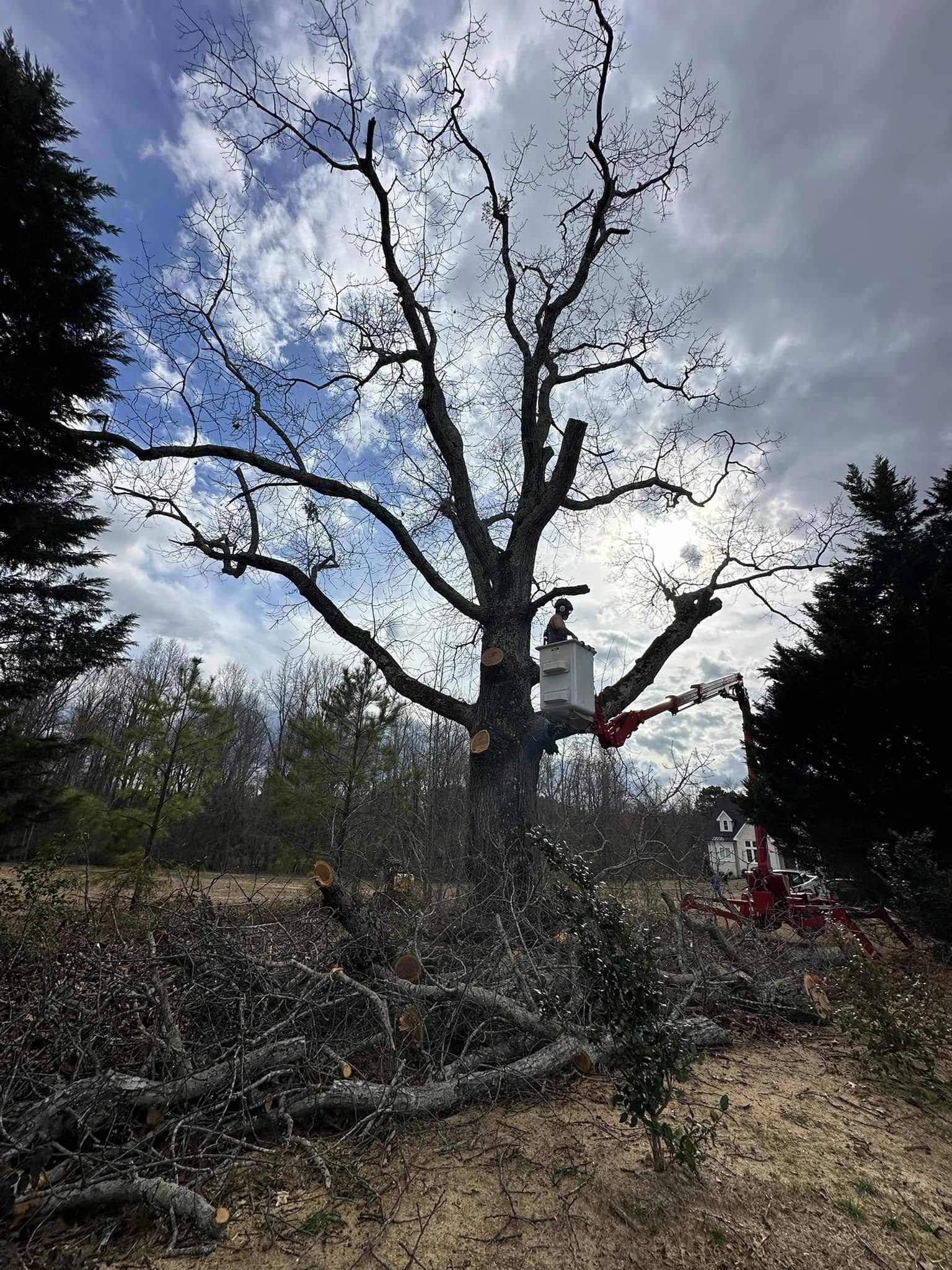
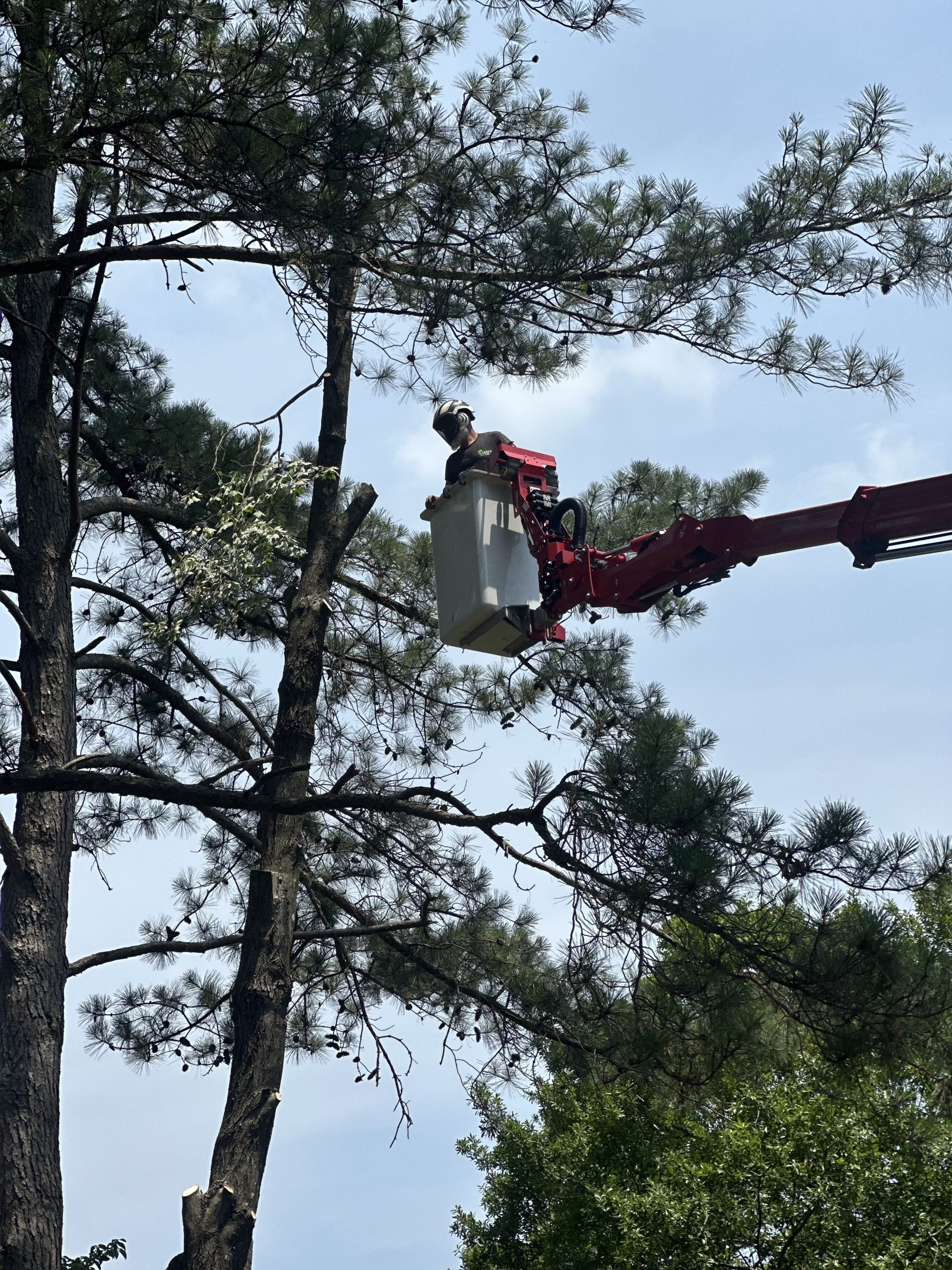
    Tree removal using a spider lift in Fuquay-Varina, NC
    ```
    DIFFICULT ACCESS & TIGHT SPACES

    When There Is No Safe Place to Simply Drop a Tree

    Hazardous trees are often located in the most difficult parts of a property. A tree may be leaning toward a house, growing between structures, surrounded by landscaping, or positioned where there is very little room for branches and trunk sections to fall.

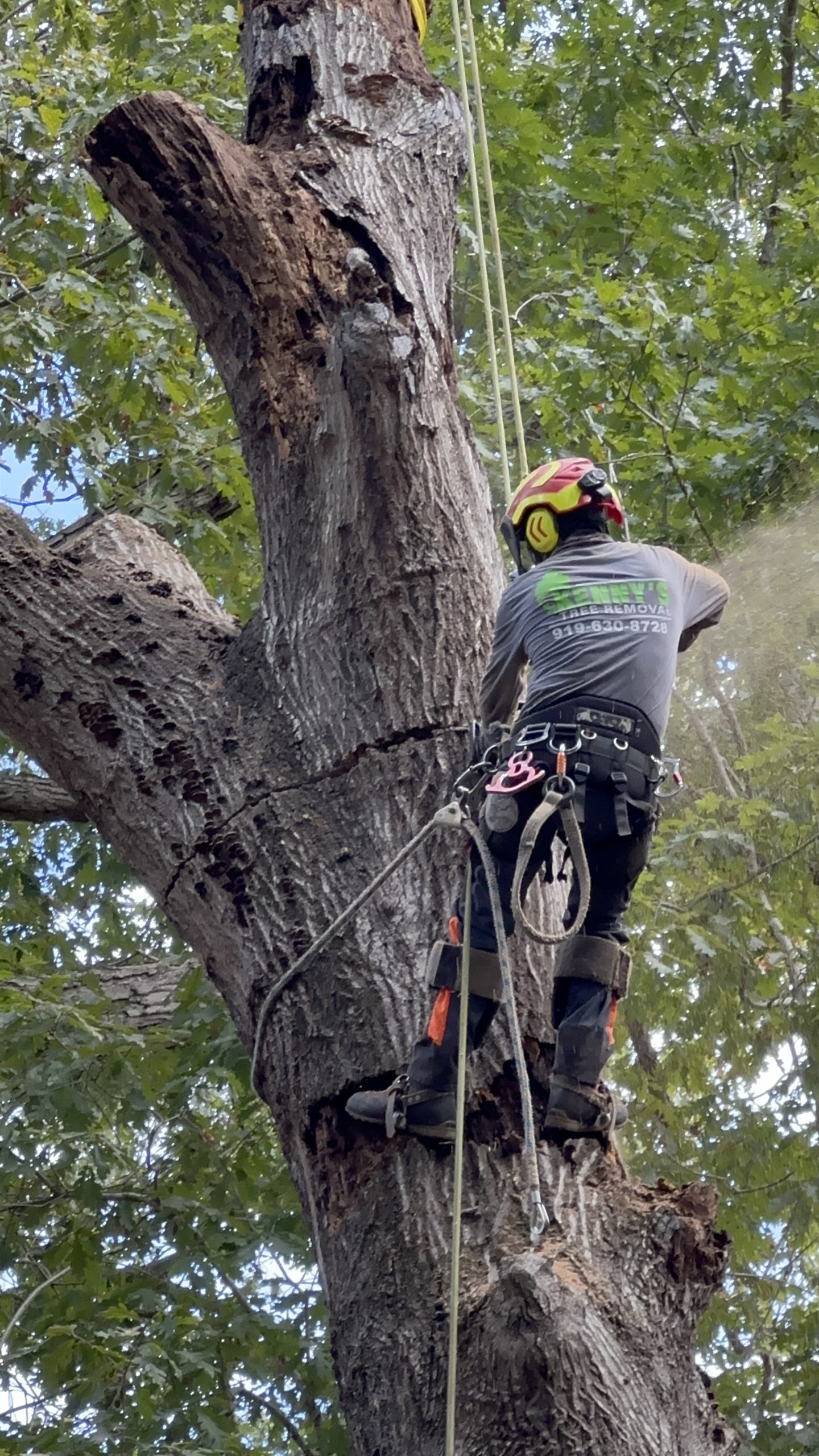
    In these situations, Kenny’s Tree Removal can use controlled removal techniques and specialized equipment to take the tree apart in manageable sections rather than relying on a single ground-level cut. The method is selected based on the tree, the property, access, and the hazards surrounding the work area.

    Climbing & Rigging

    Sections can be carefully cut and lowered when surrounding property limits where material can land.

    Specialized Access

    Compact equipment can provide access to trees in backyards and other locations where larger equipment cannot reach.

    Crane Assistance

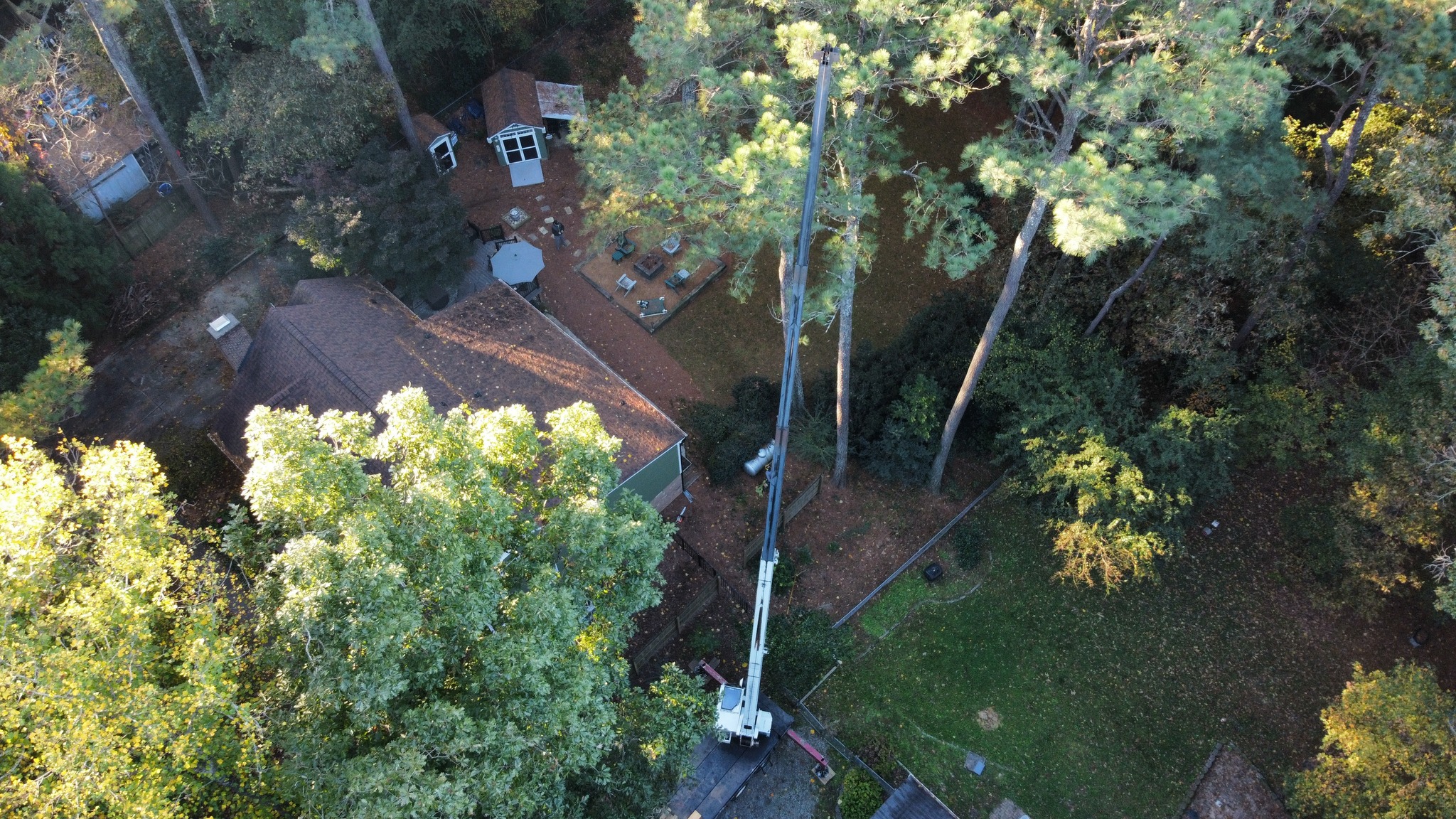
    Crane assistance may be considered when a large or unstable tree requires sections to be lifted away from the property.

    Property Protection

    The work plan accounts for homes, fences, driveways, landscaping, and other features around the tree.
    ```
    ```
    Crane-assisted hazardous tree removal by Kenny's Tree Removal
    ```
    ```
    HAZARDOUS TREE REMOVAL FAQ

    Questions About Dangerous Tree Removal?

    Every hazardous tree is different. Here are answers to some of the questions homeowners commonly have before scheduling a removal.

    ```
    ```
    How do I know if a tree is hazardous?
    Warning signs can include significant leaning, large dead limbs, cracks or splits, storm damage, visible decay, damaged roots, or branches hanging over areas where people or property could be harmed. If you're concerned about a tree, an on-site assessment can help determine whether removal or another solution is appropriate.
    Can you remove a tree that is leaning toward my house?
    Yes. Trees close to homes and other structures often require a more controlled removal plan. Depending on the tree and surrounding conditions, sections may be climbed, rigged, lowered, or removed with specialized equipment rather than allowing the tree to fall freely.
    Can you remove trees damaged by a storm?
    Yes. We handle storm-damaged trees, including broken limbs, damaged trunks, leaning trees, and trees that have fallen or become unstable. The removal method depends on the condition of the tree and the hazards around it.
    Can you remove a hazardous tree in a tight backyard?
    Yes. Limited access does not necessarily prevent removal. We can evaluate gate access, fences, landscaping, structures, and available work space to determine what equipment and removal method are most appropriate for the property.
    Do you use cranes for hazardous tree removal?
    Crane assistance may be used when a tree is especially large, unstable, difficult to access, or positioned where sections cannot safely be allowed to fall. Whether a crane is appropriate depends on the individual tree and property.
    Can you help with my insurance claim after storm damage?
    We work directly with the homeowner and can provide documentation related to the tree work for the homeowner's insurance claim. Coverage and reimbursement are determined by your insurance policy and insurance company.
    What happens after the hazardous tree is removed?
    Once the tree has been removed, the work area is cleaned and the resulting branches and debris are handled according to the scope of the project. If you would like to keep portions of the wood for firewood or another use, let the crew know before work begins.
    ```
    HAVE A HAZARDOUS TREE?

    Let's Take a Closer Look at the Tree

    If you're concerned about a dead, leaning, storm-damaged, or otherwise hazardous tree, Kenny's Tree Removal can evaluate the situation and determine the safest practical removal approach for your property.

    Serving homeowners throughout our Central North Carolina service area.